Fresh Stain First Aid: What to Do Immediately in the 1st 10 Minutes After a Spill
Laundry Guide • 8 min read

Coffee lands on your sleeve mid-meeting. A kid’s juice cup tips over on the sofa cushion. Turmeric splashes off the pan while you’re cooking. None of these moments come with a warning, but what you do in the next few minutes matters more than almost anything you do afterward this is exactly where fresh stain first aid makes the difference between a stain that lifts out easily and one that sets in permanently.
Do This Right Now
- Blot, don’t rub – press a clean cloth onto the spill to absorb it without spreading it
- Scrape off any solids before blotting the liquid underneath
- Keep it away from heat – no sun, no radiator, no rushing to dry it
- Don’t rub in soap or water unless you’re sure the fabric can handle it
That’s the emergency step done. Below is what to do over the next few minutes, why it matters, and how to prevent it next time.
Minute 2–5: Assess Before You Treat
Identify what caused it
Coffee, wine, food, oil, ink, or something else entirely; different stains respond to different treatments
Check the fabric care label
A treatment safe for cotton may damage silk, wool, or a delicate blend
Note the fabric composition
Natural fibres and synthetics react differently to water, heat, and common stain removers
Consider the garment's construction
Linings, trims, and embellishments can complicate a DIY fix and may call for gentler handling
Minute 5–10: Contain It Until You Can Deal With It Properly
If you can’t fully treat the stain right away you’re at work, at a restaurant, or simply don’t have the right products on hand the goal shifts to containment.
- Keep blotting periodically if the fabric stays damp, to stop the stain from spreading further.
- Avoid throwing it straight in a hot wash or dryer heat is one of the fastest ways to set a stain permanently.
- Don’t iron over the area, even to “dry it faster” this is one of the most common mistakes that turns a treatable stain into a permanent one.
- Set the garment aside for proper treatment rather than attempting a rushed fix with whatever’s nearby.
For delicate, formal, or care-label-specific garments, consider professional dry cleaning rather than experimenting with home treatments.
Why the First 10 Minutes Matter So Much
Fresh stain first aid isn’t about panic it’s about a few calm, correct moves before the stain has time to bond with the fabric. Once a stain dries, sets under heat, or sits for hours, the compounds causing the discoloration work their way deeper into the fibres, and what could have been a five-minute fix at home turns into a job for a professional cleaner, if it comes out at all.
- A fresh stain is chemically “loose” it hasn’t bonded with the fibres yet
- Heat from an iron, dryer, or hot water can permanently set a stain by cooking the compound into the fabric
- Rubbing spreads the stain and pushes it deeper instead of lifting it out
- The fabric and stain type both affect what should happen next there’s no single universal fix
What Makes a Stain Harder to Remove Later
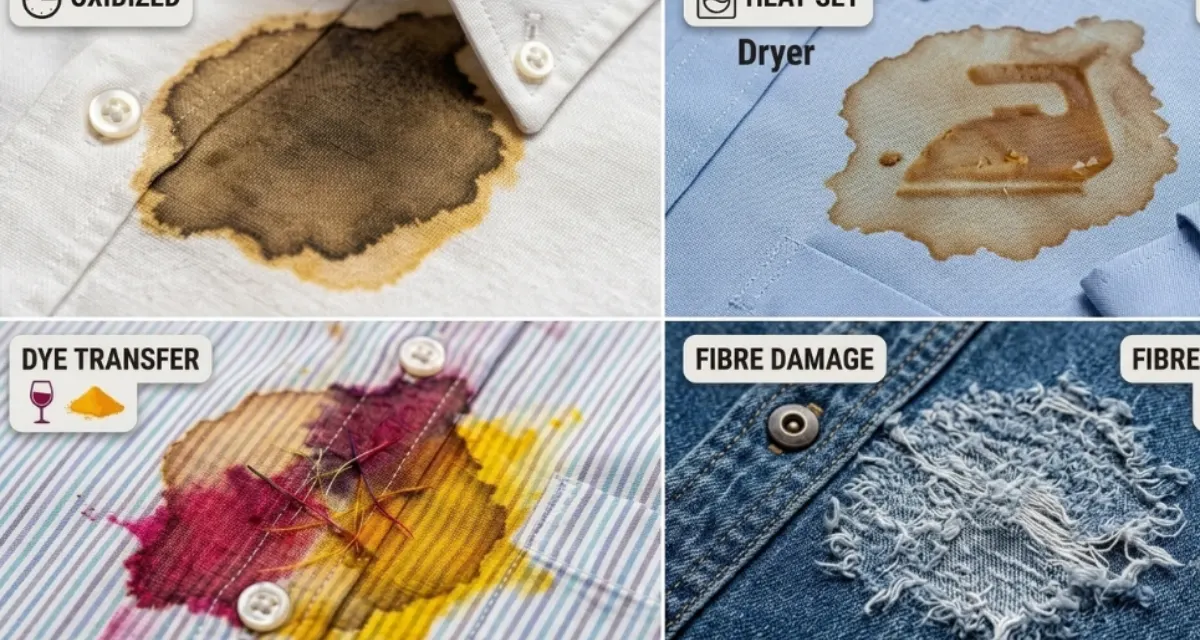
- Oxidation – some stains chemically change color and bond more firmly with fabric the longer they’re exposed to air
- Repeated heat exposure – every accidental trip through a warm dryer or a quick iron pass sets the stain a little further
- Dye transfer – from the stain itself or from other clothing washed alongside it, especially with strong colors like wine or turmeric
- Multiple failed DIY attempts – repeated scrubbing or harsh treatments on a delicate fabric can weaken fibres even if the stain doesn’t fully lift
Common Culprits Behind Everyday Stains
- Coffee, wine, food, and sugary drinks
- Perspiration and body oils, especially on collars and underarms
- Perfume, deodorant, hairspray, and other personal-care products
- Bleach, disinfectants, and household cleaning products
- Hair-treatment products, which can react unpredictably with certain dyes
Knowing the cause matters even after the stain seems to have faded telling a professional cleaner what caused it, even if it’s no longer visible, helps them choose the right treatment.
Stain Prevention Tips for Daily Life
- Keep a small stain removal pen or wipes in your bag or car for the first-blot step on the go
- Avoid wearing light, delicate fabrics on days you know involve messy food or cooking
- Treat sweat and body-oil marks on collars and cuffs before they build up over multiple wears
- Store garments clean a faint, unnoticed stain can oxidize and darken while sitting in the wardrobe
- Follow the care label before doing laundry as usual, rather than assuming “it’ll be fine in a normal wash and fold“
How Bubble Bliss Handles Stain Removal
- Fabric, dye, and stain type are assessed before any treatment is applied
- Delicate fabrics receive gentler methods matched to what the material can handle
- Customers are asked what caused the stain, even if it’s no longer visible, so treatment matches the actual cause
- Some old, oxidized, or dye-sensitive stains may not be fully removable, and we’ll tell you honestly if that’s the case
Bubble Bliss Care pickup and delivery are available across Liwan, Dubai Land, Silicon Oasis, and Academic City.
Frequently Asked Questions
1. What's the single most important thing to do right after a spill?
Blot, don’t rub and get the garment away from heat.
2. Can I use hot water to treat a fresh stain?
It depends on the fabric and stain type heat can set certain stains permanently, so cool water is the safer default.
3. Is it true that some stains just can't be removed?
Yes. Old, oxidized, or dye-sensitive stains may not fully come out even with professional treatment.
4.Should I tell a professional cleaner what caused the stain?
Yes, even if it’s no longer visible it helps them choose the right treatment.




Easy WhatsApp Booking
Free Pickup & Delivery
Fabric-Safe Cleaning
What Our Customers Say
Bundle & Save ✨
Book your laundry service today and enjoy exclusive laundry package savings!